
Best Snooker Cues for Beginners in the UK: 2026 Buyer’s Guide
| KEY TAKEAWAYS The Britannia Champion range starts at £120 and gives beginners a genuine handmade ash cue, not a mass-produced painted finish.Most beginners are best served by a 3/4 jointed cue at 57 inches, weighing between 17.5 and 19oz with a 9.5mm tip.The £120 to £180 price range offers the best value, with hand-spliced butts and strong stock availability.Not sure what to look for yet? Read the full guide to choosing a snooker cue before coming back to this page. |
Britannia’s hand-spliced cue range. Choosing the right first cue makes a real difference for a beginner.
If you’re looking for the best snooker cue for beginners in the UK, you’re already thinking about the game the right way. Moving on from house cues is one of the most significant steps a new player takes. Playing with your own cue, consistently weighted, properly tipped, and sized for your height, makes your development faster and your game more enjoyable.
This post covers specific cues from the Britannia range, organised by price. Every model here is designed in the UK using proper handmade ash shafts and quality fittings. There are no mass-produced painted cues on this list.
If you’re still weighing up tip sizes, weights, and joint types, read our complete guide to choosing a snooker cue first. This post is the product roundup. That post covers the buying principles.
Three things matter most when choosing a first snooker cue.
For a full breakdown of length, joint types, timber choices, and price guidance, see the Britannia beginner’s guide to choosing a snooker cue. Everything below assumes you have the basics sorted and want to know which specific cue to buy.
Use this table to compare the Britannia beginner cue range at a glance.
| Cue | Price | Tip Size | Joint | Weight | Best For |
| Britannia Meteor | £120 | 9.5mm | 3/4 jointed | 17.5-19oz | Developing players |
| Britannia Hawk | £120 | 9.5mm | 3/4 jointed | 17.5-19oz | Developing players |
| Britannia Hornet | £135 | 9.5mm | 3/4 jointed | 17.5-19oz | Club players |
| Britannia Invincible | £135 | 9.5mm | 3/4 jointed | 17.5-19oz | Club players |
Browse the full Britannia snooker cues range to see current stock and all available models.
This is where the Britannia range opens up the most for new players. Each cue here is built on the same quality ash shaft, and the butts are genuinely hand-spliced rather than using an effect finish. That means real exotic timbers, individually selected and joined by hand.
A hand-spliced butt adds stability to the cue over time and looks significantly better after regular use. If you’re planning to play seriously and want a cue that will still feel right in three years, this is the bracket to buy in.
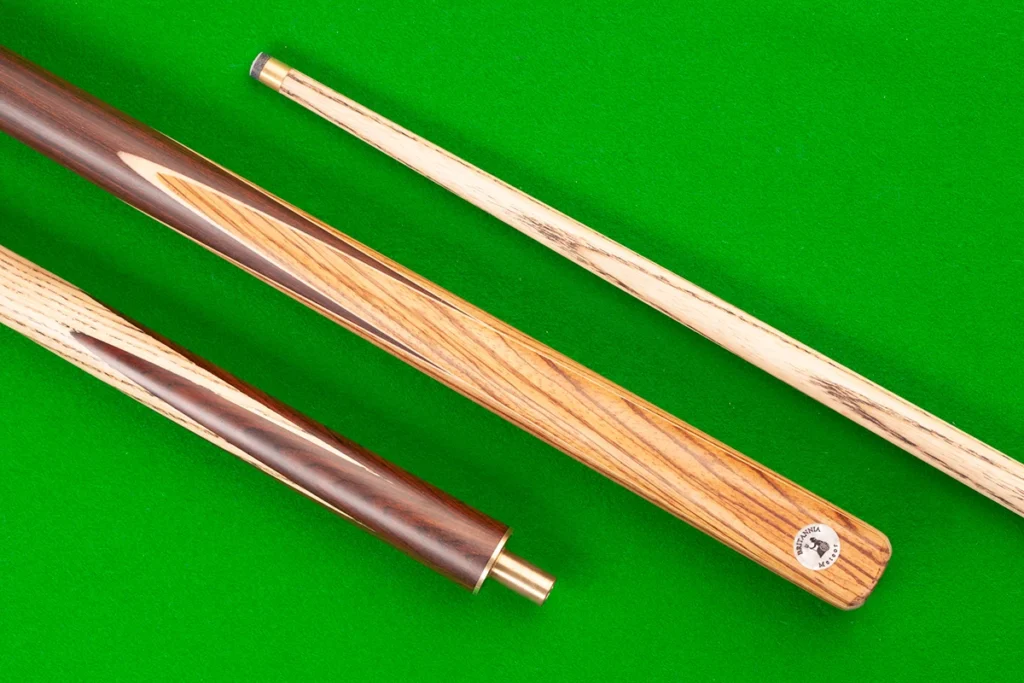
The Meteor is built on a 57-inch ash shaft with a hand-spliced rosewood butt featuring exotic zebreano and natural sycamore veneers. Eight hand splices give it a distinctive striped appearance. It plays identically to the rest of the Champion range but looks and feels more substantial in hand.
This is a good choice if you want your first cue to last a while and reflect how seriously you take the game. Quality Grand tip, brass ferrule, and quick-release joint come as standard with skilled craftsmanship in the butt splicing.
Specifications
View the Britannia Meteor Champion Cue.
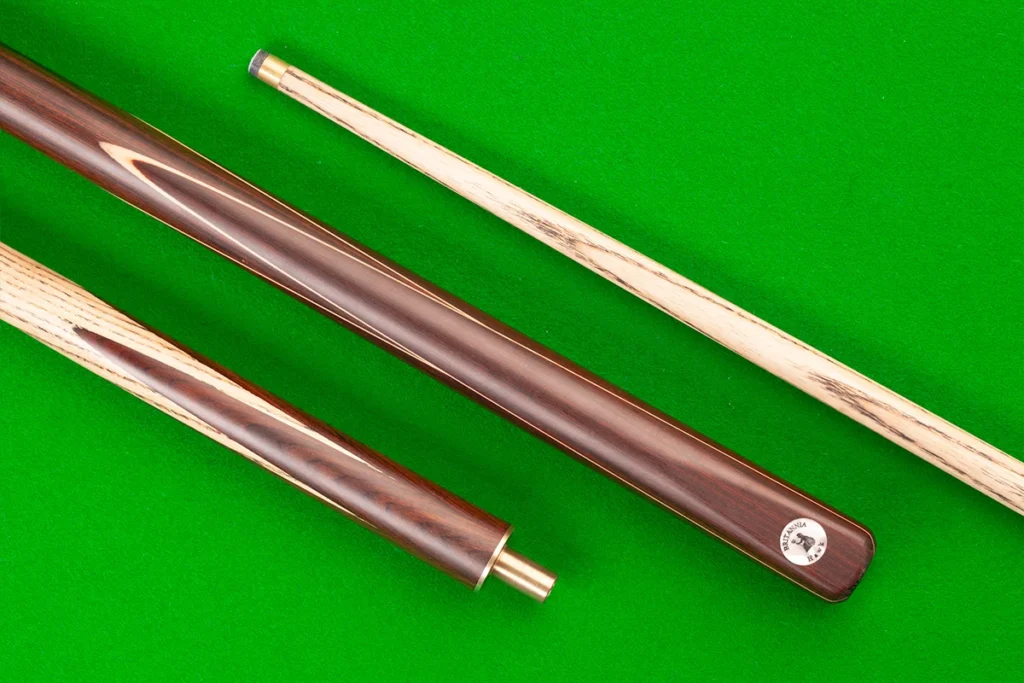
The Hawk is the Meteor’s quieter companion. Where the Meteor combines rosewood with zebreano for a bolder striped pattern, the Hawk uses rosewood with natural sycamore veneers for a cleaner, more restrained finish. Same price, same spec, different look.
If you’re drawn to a cue that performs without demanding attention, the Hawk is worth comparing with the Meteor before you decide. Both are excellent first handmade cues at this price point.
Specifications
View the Britannia Hawk Champion Cue.
Longevity is why investing £120 to £150 in a first snooker cue is genuinely worth it compared to a cheaper mass-produced alternative, and why a properly handmade ash shaft will still feel right as the player’s game develops over months and years. Michael West, Britannia Cues
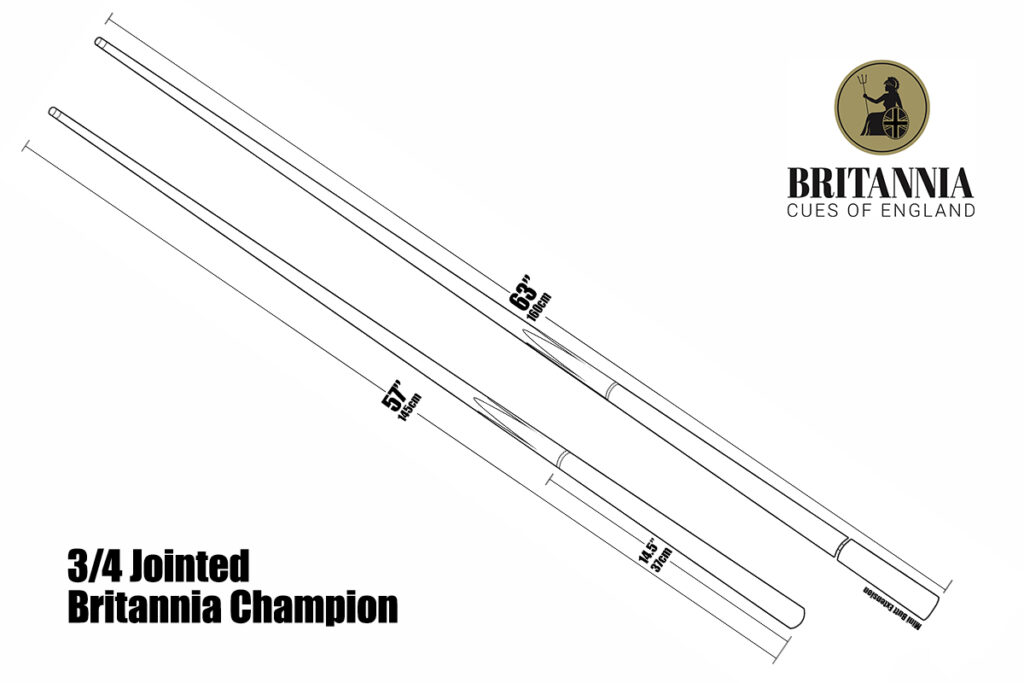
For most beginners, the 3/4 jointed cue is the best in choice practical option. The joint sits on the forearm section, well above the grip. During play, you will not feel it. When it is time to leave the club, the cue breaks into two manageable pieces.
One-piece cues play well because there is no joint to interrupt energy transfer through the shaft. If you’re playing at home on a private table and the cue never needs to travel, a one-piece is a fine option. But for anyone heading to a club, the 3/4 jointed design is the sensible compromise for ease.
Centre-jointed (50/50 split) cues pack down smaller and suit players who travel light. Most club players move away from centre joints as their game develops, since the joint position sits near the balance point and can affect the overall feel.
The Patriot Champion Cue in Britannia’s range is a great example of an affordable one-piece at £135 for players who prefer that purist format.
For a detailed look at joint types and how they compare, see our guide to one-piece vs two-piece pool cues.
The standard adult snooker cue has historically been 57 inches. Most players between 5ft 6 and 6ft will find this comfortable. If you’re over 6ft, a 58-inch or 59-inch+ cue is worth trying for a more natural stance. Shorter players, particularly those under 5ft 6, often play better with a 54 or 56-inch cue. Britannia offers junior lengths from 48 inches upwards for younger players a well as some oversize cues 58-inch plus for anyone needing a longer than standard cue.
For weight, 17.5 to 19oz suits the majority of beginners. Lighter cues give more feel on soft, controlled shots. Heavier cues add momentum on long pots and break shots. The Britannia Champion range covers 17.5 to 19oz, which gives you options within a single product line. If you’re buying without trying first, 18oz is a safe starting point.
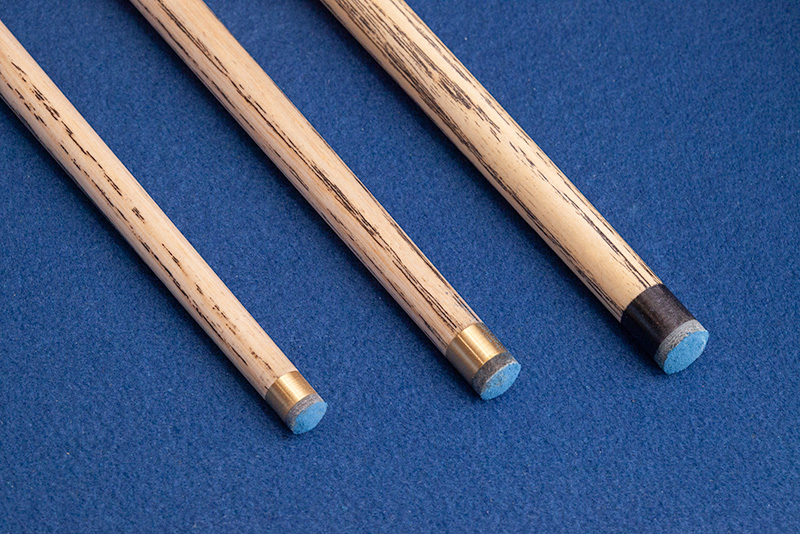
All Britannia Champion cues come with Grand tips at 9 to 9.5mm. This is the standard snooker tip size and gives you a useful contact area for building a consistent strike, while remaining precise enough for developing positional play over time. Larger tips reduce the margin for error, which is genuinely helpful for players who are still establishing their technique.
As your game develops, you may want to consider ferrule options. See the brass vs titanium ferrule guide for snooker cues for a full comparison before buying at the upper end of the budget.
When you’re ready to replace the tip, you’ll find everything you need in the Britannia cue tips range, including the Grand tips fitted as standard on Champion cues.
Browse the full Britannia snooker cues range to find the right model for your budget and playing style.
Browse All Britannia Snooker Cues
A good first cue is one built on quality ash, with a 3/4 joint, a 9 to 9.5mm tip, and a weight between 17.5 and 19oz. The Britannia Champion range starts at £120 and delivers all of this on a proper handmade cue. Most beginners who play regularly will get more out of the £120 to £180 models, where the hand-spliced butt adds durability and feel over time.
Most beginners find 17.5 to 18.5oz comfortable. Heavier cues can help on power shots but cause fatigue during longer sessions. Lighter cues feel nimble but can feel imprecise when your stroke is still developing. If you have no strong preference, 18oz is a good starting point. You can try different weights at your local club on house cues before committing.
9 to 9.5mm is the right range. A larger contact area reduces the margin for error on ball contact, which is helpful when technique is still developing. All Britannia Champion cues come fitted with Grand tips at 9 to 9.5mm as standard. As you improve and want more spin control, you can move to a smaller tip.
If you’re serious about improving, £100 to £150 gets you a handmade ash cue with a properly spliced butt that will last years. Avoid the very cheapest options online, as inconsistent timber and poor joints make them genuinely harder to learn on.
For most beginners, yes. The 3/4 joint sits well above the grip and has no effect on feel during shots. A centre joint is more portable but sits closer to the balance point, which some players notice as they develop. Both are more practical than a one-piece for regular transport, but the 3/4 joint is the preferred choice among club players at all levels.
Snooker cues typically have tips of 9 to 10mm to suit the larger cue ball used in snooker. English pool cues usually have 8 to 8.5mm tips to match the smaller ball and table dimensions. You can play pool with a snooker cue at club level, but a dedicated pool cue gives better feedback. See the full range of Britannia English pool cues if pool is your main game.
Yes, if you’re transporting your cue to a club. Even a basic soft case protects the shaft from knocks and prevents the tip from damage in transit. Browse the Britannia cue cases range for options to match your budget.
Wipe the shaft with a soft cloth after each session. Store the cue flat or in a proper case, never leaning against a wall. Keep it away from radiators, damp, and direct sunlight. Replace the tip when it becomes flat and glazed. For more detail, see the cue care guide on the Britannia website.
New tips can be fitted using cue tip cement. Start with a slightly oversized tip, glue it in place, and trim it down to match the ferrule once dry. If you’re not confident doing this yourself, your local club or a cue specialist can fit it for you. Replacement cue tips are available in the Britannia accessories range.
