
The ferrule is the metal sleeve at the tip end of your cue. Brass has been the standard for over a century and remains a solid, reliable choice. Titanium is harder, lighter, and holds its shape better after multiple re-tips. It can reduce cue ball deflection slightly when playing with side, but comes with a short adjustment period and a higher price point. Both are used at professional level.
When comparing a brass vs titanium ferrule snooker cue, the difference can be hard to understand at first glance. Whether you are looking at a snooker cue with titanium ferrule or a traditional brass one, both have their place in the game. The price gap between the two is noticeable, and the claims made about titanium ferrules can sound impressive. But what does a ferrule actually do, and does the material genuinely affect how a cue plays?
This guide covers exactly that. We will look at what each material offers, where the real differences lie, and which type of player is likely to benefit most from each.
The ferrule is the small metal sleeve fitted at the tip end of the cue shaft. Its job is straightforward: it protects the wood from splitting under the repeated impact of striking the cue ball, and it provides a firm, stable base for the cue tip to be glued onto.
Without a ferrule, the constant striking force would eventually cause the end grain of the ash shaft to crack or split. The ferrule spreads that force more evenly and keeps the shaft intact over years of play.
It also plays a secondary role in how the cue feels on contact. A harder or lighter ferrule transmits impact energy differently to your hand, which is one reason players notice a change in feel when switching between brass and titanium.
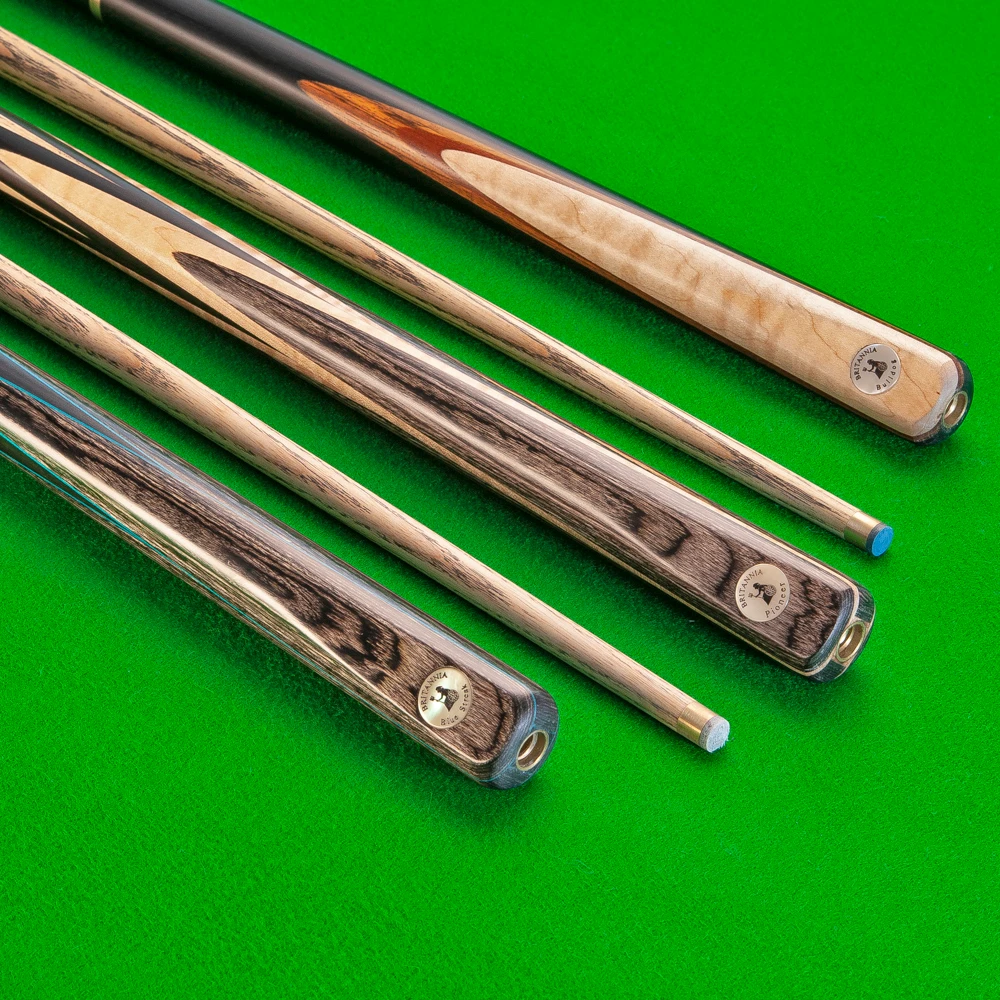
Brass has been used on snooker cues for well over a century. It became the standard early on because it was practical to machine in small sizes, strong enough for the demands of play, and produced a cue that felt right to players at the time. That tradition has continued ever since.
Wears with re-tipping. Brass is softer than titanium. Each time a tip is replaced, the sides of the ferrule are slightly abraded during the trimming and shaping process. Over many re-tips, this gradually reduces the ferrule diameter and can change the feel of the cue.
Tarnishes over time. Brass discolours with exposure to air and moisture. It needs occasional polishing to keep it looking clean, which is a minor but real maintenance consideration.
For most players coming into the game, a brass ferrule cue is exactly what you need. The feel is what snooker has always been built on, and the cues in our Traditional and Champion ranges perform consistently at every level.”— Michael West — Britannia Cues
The titanium snooker cue is a more recent development in the sport. Titanium ferrules became commercially available around 2018 and have since been adopted by a number of professionals, including John Higgins, Jimmy White, Mark Allen, Kyren Wilson, and Stephen Maguire. The titanium ferrule itself, that small metal sleeve at the tip, is where the key difference lies. Titanium as a material is harder and lighter than brass. In the context of a ferrule, those two properties produce some practical differences in how the cue performs and how it holds up over time.
All professional snooker players compete under equipment standards set by the WPBSA
| Brass | Titanium | |
| Weight | Heavier at the tip | Lighter |
| Hardness | Strong | Harder and stronger |
| Cue ball deflection | Standard | Slightly reduced |
| Shape after re-tipping | Wears gradually | Retains original dimensions |
| Tarnishing | Yes — needs polishing | No |
| Feel on impact | Warmer, familiar | Crisper, more direct feedback |
| Learning curve | None | Short adjustment period |
| Price point | Lower | Higher |
| Best for | Traditional and budget players | Competitive and performance players |
Britannia produces cues across several ranges, and the ferrule type differs between them.
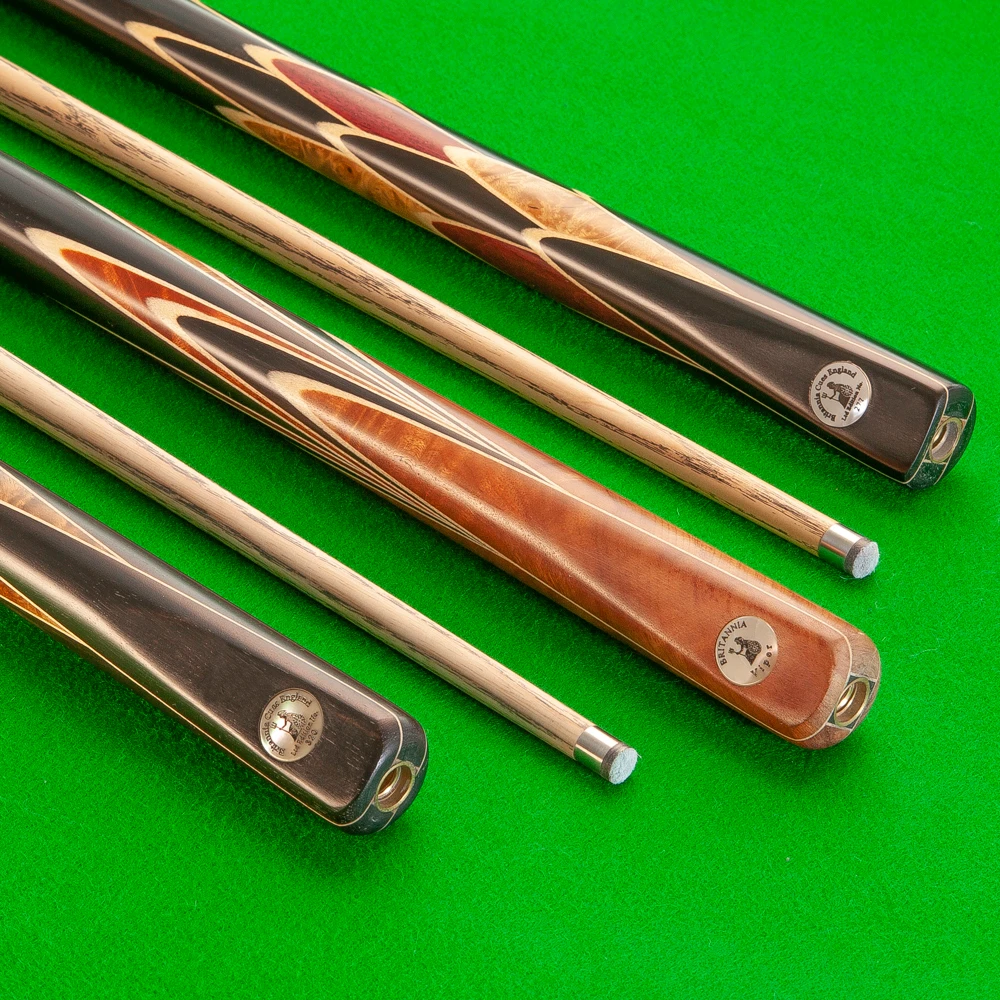
Every cue in the Britannia Titanium Range features an aviation-grade titanium ferrule, precision machined from titanium alloy. The ferrules on the Titanium Range measure 9.5mm to 9.8mm in diameter and are produced using a carbide machining process for accuracy and long-term consistency. The range also uses titanium threaded joints throughout.
Models include the Polaris, Viper, Storm, Rapier, Hellfire, Gauntlet, Sabre, Slammer, Phoenix, Black Arrow, and the individually numbered Limited Edition cues.
The Titanium Range also includes English pool cues for players who want the same performance benefits in a pool format — browse the full range on the “ Pro Range ” page.
The Britannia Traditional Range uses conventional high-tensile brass ferrules, carbide machined for strength and consistency. These cues offer the classic snooker feel at a professional level of quality, with models including the Apex, Pioneer, Blue Streak, Bulldog, Lance, Neptune, Thor, Taurus, and Focus.
The Britannia Pro Range also uses conventional high-tensile brass ferrules, carbide machined
for strength and consistency. These cues offer a slimmer tip ideal for UK pool to enable more
accuracy and professional level of play, with models including the Python, Exocet, Shadow,
Sidewinder, Vigilant, Bullet, Maverick, Skybolt, Eagle, Trident, Mistral, Javelin, Jupitar, and
Satan.
The Britannia Champion Range is designed for beginners and developing players. These cues feature brass joints and ferrules and are a practical, reliable starting point before stepping up to a higher specification.
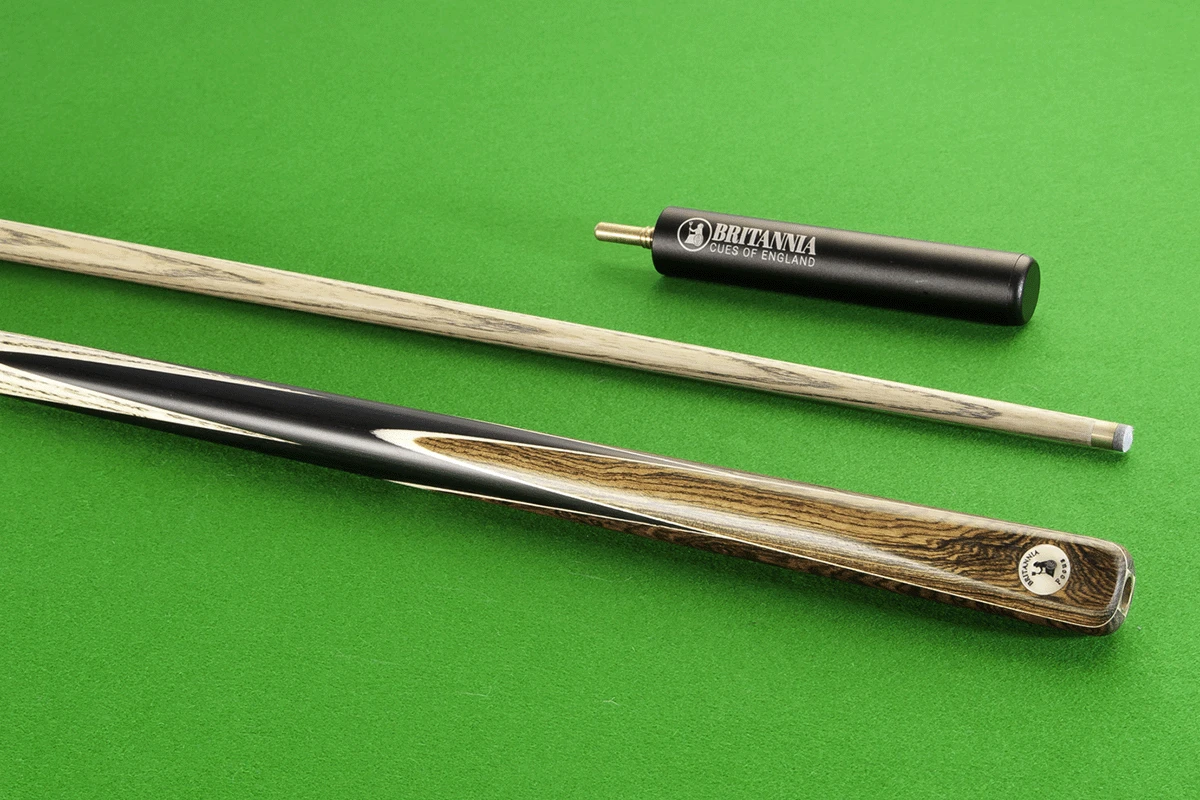
The honest answer is that both work well. The choice depends on where you are in your game and what you are looking for from a cue.
It is also worth noting that feel is personal. If you can visit our showroom in Coventry, you can handle cues from both ranges before you commit.
| Visit the Britannia Cues Showroom Our Coventry showroom stocks the full Britannia range. Come and try both brass and titanium ferrule cues in person and speak to the team about what suits your game. Atlantic House, Falkland Close, Charter Avenue, Coventry, CV4 8AU. |
What is a ferrule on a snooker cue?
The ferrule is the small metal sleeve fitted at the tip end of the cue shaft. It protects the wood from splitting under the repeated impact of striking the cue ball, and provides a solid, stable base for the cue tip to be glued onto.
Is a titanium ferrule better than brass?
It depends on what you are looking for. Titanium is harder, lighter, and holds its shape better after multiple re-tips. Brass is the traditional choice and offers a warmer, more familiar feel. Neither is objectively better for everyone.
Do professional snooker players use titanium ferrules?
A number of professionals have switched to a titanium snooker cue ferrule in recent years, including John Higgins, Jimmy White, Mark Allen, Kyren Wilson, and Stephen Maguire. That said, many pros continue to use brass. The choice is personal and depends on feel preference. All professional players compete under equipment standards set by the WPBSA.
You can find the full list of ranked professionals on the World Snooker Tour website.
Will a titanium ferrule change how my cue plays?
It can. Titanium is lighter than brass, which can slightly reduce cue ball deflection when playing with side. Some players also notice a crisper, more direct feel on impact. There is typically a short adjustment period for players switching from brass.
Do I need to maintain a titanium ferrule?
Very little maintenance is needed. Unlike brass, titanium does not tarnish or corrode, so it does not require regular polishing. It also retains its original shape better after re-tipping, meaning a more consistent feel over time.
Which Britannia cues have titanium ferrules?
All cues in the Britannia Titanium Range feature aviation-grade titanium ferrules and titanium joints. The range includes the Polaris, Viper, Storm, Rapier, Hellfire, Gauntlet, Sabre, Slammer, Phoenix, Black Arrow, and the Limited Edition models.
Ready to find the right cue? Browse the full Britannia Snooker Cue range, or go directly to the Titanium Range and Traditional Range pages for a closer look. If you have a question about which cue suits your game, get in touch and we will be happy to help.
