
So you’ve decided to take your snooker game seriously. Maybe you’ve been playing at your local club for a few months, or perhaps you’re fed up with using the battered house cues that have seen better decades let alone days!
Whatever’s brought you here, you’re ready to invest in your own snooker cue and join thousands of players across the UK who’ve made the switch.
But here’s the thing. Walking into a specialist shop or scrolling through an online catalogue can feel overwhelming. There are different lengths, weights, tip sizes, joint types, and more timber options than you knew existed. What’s the difference between a one-piece, centre jointed or a three-quarter jointed cue? Does timber really matter? And why do some cues cost fifty quid while others set you back several hundred?
This guide will walk you through everything you need to know. We’ve helped countless players across the UK find their perfect cue, and we’ll share that expertise with you here. By the end, you’ll know exactly what to look for and be ready to make an informed decision.

Browse All Snooker Cues | More Guides
Before we dive into the technical details, let’s clear up some confusion. A snooker cue isn’t just a stick with a piece of chalk at one end. It’s a precision instrument that’s been carefully designed and crafted to help you play your best game.

The best snooker cues share several characteristics. They have straight, even grain Ash shaft that increases its resistance to warping over time. They have precision-engineered joints that connect smoothly without affecting your strike. And they have carefully balanced weight distribution that makes the cue feel natural in your hand.
When you’re choosing a cue, you’re really balancing three things. First, there’s the quality of materials and craftsmanship. Second, there’s how well the cue suits your playing style and physical dimensions. Third, there’s the price you’re comfortable paying.
Many beginners make the mistake of thinking they need to spend a lot of money to see improvement. While a quality cue certainly helps, the reality is that technique and practice matter far more than equipment. That said, the right cue will make your learning journey smoother and more enjoyable.
Getting the right length is essential because it affects your stance, your bridge, and ultimately your shot consistency. Using a cue that’s too long or too short will force you into uncomfortable positions that sabotage your technique.
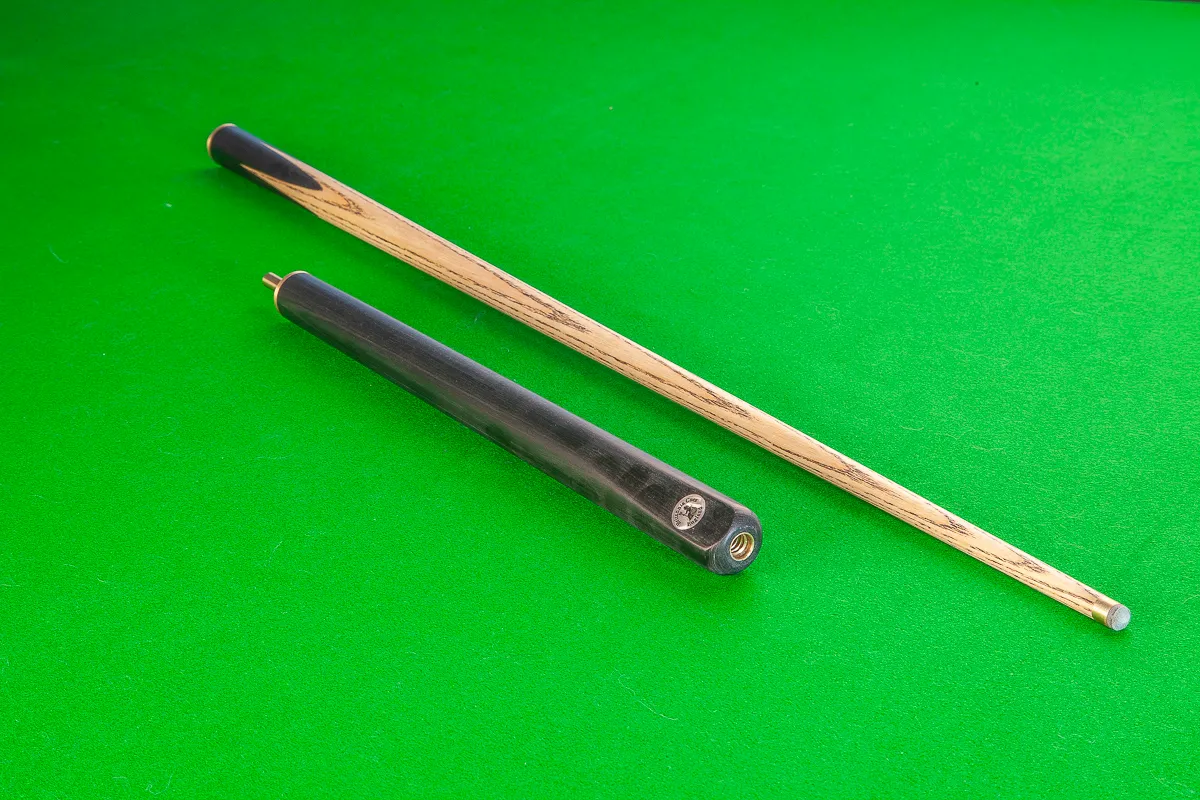
The simple rule: When standing in your normal playing stance with your hand extended down your leg, the cue should sit at roughly the same height as your shoulder. Most adults find they’re comfortable with a 57-inch to 58-inch cue, which is the standard length you’ll find in most UK shops and online stores.
If you’re particularly tall you might prefer a 59-inch to 60-inch cue. Shorter players, or younger players who are still growing, often find 44-inch to 53-inch cues more comfortable.
Children and teenagers should avoid using full-length adult cues until they are the right height to use them. Not only is the length wrong which encourages bad habits, but the weight is usually inappropriate too. Getting your child their own correctly sized cue will accelerate their learning and prevent frustration.
56 Inch Cues | Browse by Length
Cue weight is measured in ounces, and UK snooker cues typically range from about 17 ounces up to 20 ounces. For most players, somewhere between 17 and 19 ounces feels natural. But don’t just go with what’s common. The right weight for you depends on your strength, your playing style, and what feels comfortable during extended play.
Lighter cues, around 16 to 17 ounces, tend to suit players who prefer a more delicate and controlled touch. They’re easier to control during soft shots and can help with accuracy when you’re playing finesse shots around the baulk colours. Some players with smaller builds or less upper body strength also find lighter cues easier to handle.
Heavier cues, from 19 ounces upwards, give you more power behind your break shots and long pots. They can help you maintain a steady cue arm during powerful strokes. However, they can also cause fatigue during longer practice sessions or matches and it is harder to taper off that power for softer more delicate shots.
Most UK beginners find 17.5 to 18.5 ounces is a good starting point. If you’ve been playing with house cues at your local club, pay attention to how heavy they feel. That’ll give you a baseline as there’s no right or wrong, just your own preference.
Here’s a practical tip. Before committing to a weight, try playing a few frames with cues of different weights if you can. Many specialist shops will let you test cues before buying. If that’s not possible, spend some time handling cues in person even if you end up buying online.
Cue Weight Guide | Browse Our Range
The tip of your cue is the small piece of leather, phenolic, or composite material that actually contacts the cue ball. Tip sizes are measured in millimetres, and getting this right affects everything from your ball control to your ability to spin the ball.
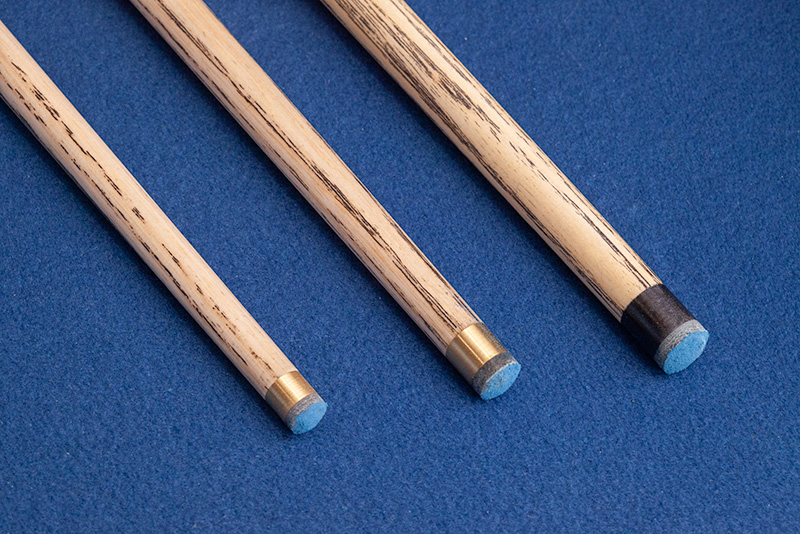
Standard snooker tips are typically 9 to 10 millimetres in diameter. Most professionals and serious amateurs prefer 9.5 millimetres, which offers a good balance between control and power. Beginners often find slightly larger tips, easier to hit cleanly because there’s more surface area to connect with the cue ball. This is also the case with UK Pool cues.
Smaller tips, around 9 millimetres, give you more cue ball control and make it easier to apply spin. They’re favoured by players who rely on positional play and delicate safety shots. However, they require more precision and are less forgiving of imperfect contact.
Some tips are made from layered leather, which is the traditional choice and offers good feel. Others use phenolic or composite materials, however, these are typically reserved for break cues where power is the important factor.
One thing to consider is that tips wear down over time and need replacing. Keeping a spare tip and learning to maintain it will save you money and keep your cue performing consistently.
Cue Tips & Accessories | Cue Care Guide
The timber used in your snooker cue affects its feel, its appearance, and how it performs over time. Cue makers have access to a large assortment of excellent timbers past and present, each with its own benefits and characteristics.
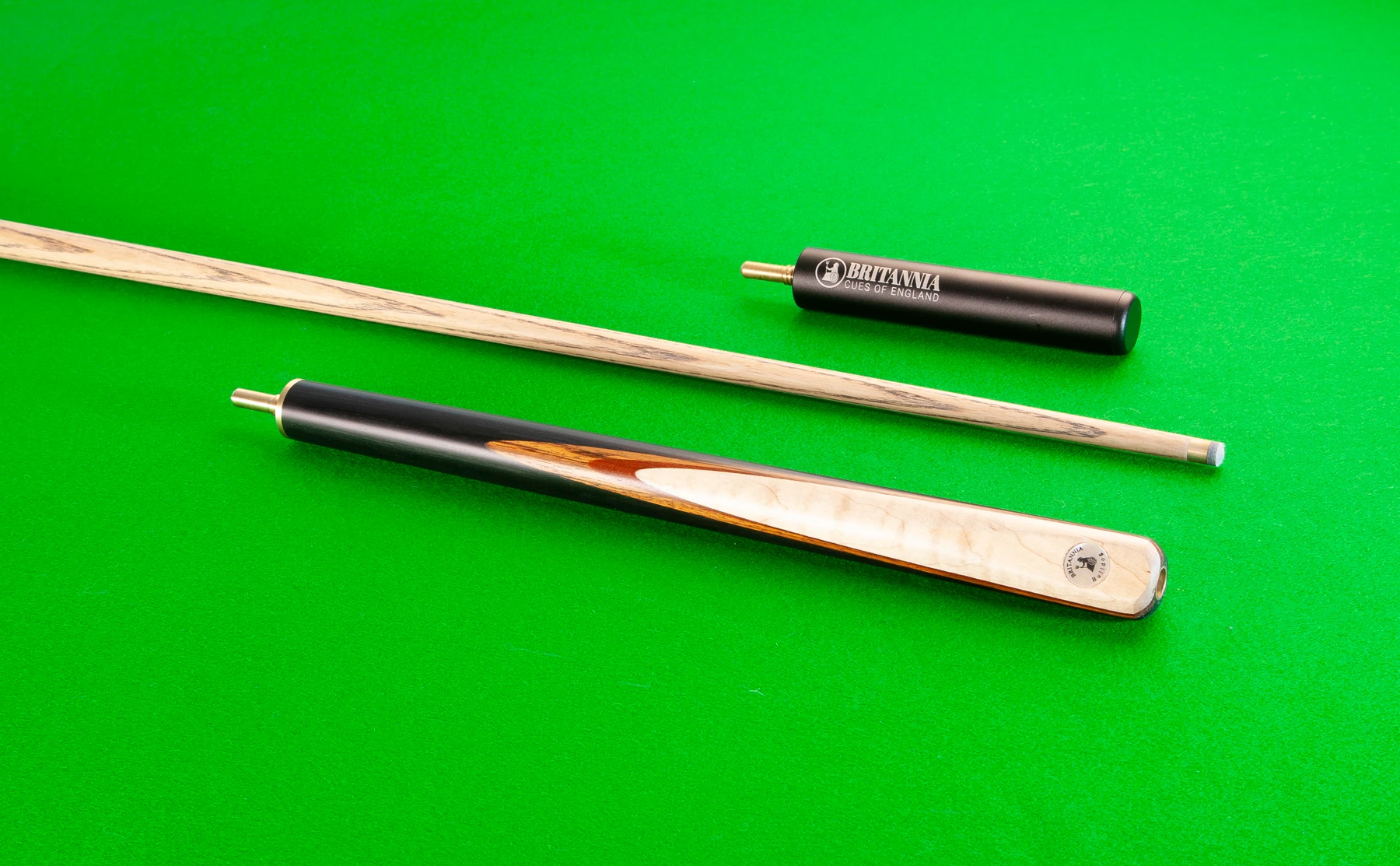
Good quality ash has straight, even grain that’s both strong and aesthetically pleasing. Air-seasoned ash, which has been dried naturally for several years, is more stable and less likely to warp than kiln-dried timber. Ash typically has a lighter colour with visible grain patterns which are exaggerated by a stain used by cue makers to make them more striking and visible.
Sapele has become increasingly popular and is often used for cue butts. It’s a denser timber than ash, which gives it a slightly different feel and nice natural weight to a cue. Sapele often has a darker, richer appearance that some players prefer due to its closer colour match to traditional Rosewood. It’s also very stable and resistant to environmental changes.
Maple is commonly used for cue shafts in American pool but it has traditionally been used in Snooker cues in the past because it’s strong and produces a consistent playing surface. Many cues combine a maple shaft with another timber butt, giving you the best of both materials. Variations of Maple are also commonly used in cue butt decoration.
Ebony is a premium timber that’s very dark and dense. It’s often used in premium cue butts due to the natural weight it provides as well as decorative splices. Pure ebony butt cues exist and are often considered to be very traditional but are relatively rare due to the timber’s weight and value.
Rosewood is another traditional and premium dense wood used in butts of cues to add weight and are often coupled with other exotic timbers for decorative purposes or in premium cues.
When choosing a timber, cue makers have to consider both how it looks and how it feels. A cue is an investment you’ll use for years, so you want to be happy with the chosen woods performance characteristics and its appearance.
Ash Cues | Snooker Cues | Timber Guide
The joint is where the cue separates into multiple pieces for storage and transport. Different joint types affect how the cue feels during play, its balance point, and how easy it is to maintain.

One-piece cues are exactly what they sound like, a single continuous piece of timber with no joint. One-piece cues often feel more responsive because there’s no joint to interfere with energy transfer. They can also be easier to maintain since there are fewer components that can go wrong. However, they’re less convenient to transport and store which is their only drawback.
Three-quarter jointed cues are the most popular choice among serious players in the UK. The cue splits three-quarters of the way down where there is more wood to create a strong joint, leaving a shorter butt section and a longer playing section. This design gives you a closer and more balanced feel akin to a one-piece cue while being much more practical for transport. The joint is usually located near the balance point, which many players find natural.
Centre-jointed cues split exactly in the middle. This design offers maximum flexibility for transporting your cue and reducing its size when you’re not using it. However, some players find the centre joint affects their feel during certain strokes and it is the weakest location to have a joint due to having less wood around it.
Most beginners and intermediate players find three-quarter jointed cues offer the best balance of performance and practicality. The joint is typically located on the forearm of the cue which is just above where you hold your cue in play so out of the way and not distracting.
3/4 Jointed Cues | One Piece Cues | Cue Care Guide
Snooker cues in the UK range from very basic cues at around thirty pounds to over five hundred to a thousand pounds for a professional grade. Knowing what you’re getting at each price point helps you set realistic expectations and find the best value for your budget.

Budget cues under £100 are typically mass-produced using lower-grade timbers, simpler construction methods and decal/painted designs. They’re fine for absolute beginners who aren’t sure whether they’ll stick with the game. However, they often have inconsistent weight distribution, less stable joints, and timbers more prone to warping. As it’s best practice to have a cue for as long as possible so you become accustom to it and grow as a player, we’d recommend spending a bit more if you’re serious about improving.
Mid-range cues from £100 to £250 represent excellent value for most players. This is where you’ll find quality hand-made cues like our Britannia range. Timbers are carefully selected, construction is more precise, and the cues are designed to last years with proper care. Most club players and serious hobbyists find this range perfectly adequate.
Premium cues from £250 to £600 offer enhanced craftsmanship and premium timbers. You’ll see more intricate splicing work, better joint mechanisms, and cues that have been individually inspected for quality. These suit players who compete regularly and want equipment that won’t hold them back.
Custom and bespoke cues above £600 are made to order by specialist cue makers. You’ll specify every detail, from timber selection to exact weight. These are instruments for players who treat snooker as a serious passion or profession.
Our advice for most beginners. Start with a quality mid-range cue. You’ll get years of use from it, and by the time you’ve outgrown it, if you do at all, you’ll know exactly what you want in your next cue.
Entry Level | Mid Range | Premium
We’ve seen thousands of beginners make the same mistakes when buying their first snooker cue. Here’s what to avoid
Just because a cue costs more doesn’t mean it’s right for you. Professional players use specific cues that complement their physique such as height, or playing style, and they have thousands of hours of practice with them. A beginner won’t necessarily benefit from a high priced cue designed for a top-level player. The number one thing is the feel of the cue which is why we always recommend visiting our showroom if at all possible.
Your height, arm length, and strength all affect what cue suits you. A tall player using a short cue will develop bad habits, just as a smaller player struggling with a heavy cue will strain their wrist. Get the basics right from the start.
A beautiful cue is nice to look at, but if it doesn’t play well, you won’t enjoy using it. Some of the plainest cues we’ve sold have been favourites with regular players because they feel great.
Cues need care to make them last. Letting a tip wear down, neglecting the ferrule, or storing your cue in non-ideal conditions will ruin even the best instrument. Learn the basics of cue maintenance and your investment will last decades. You can find our cue maintenance guide here for some pointers: Cue Care Guide.
Online shopping is convenient, but buying a cue without trying it first is risky. If possible, visit a specialist shop. If you’re buying online, research thoroughly and buy from a reputable dealer, preferably with a return policy.
Cue Care Guide | All Accessories
Buying from the right source is just as important as choosing the right cue. The UK has several options, each with pros and cons.
Staff in genuine cue shops usually play the game themselves and can help match you to the right cue. They often have cues you can try before buying.
Online specialists offer convenience and sometimes better prices due to their remote setups. Look for dealers who specialise in snooker and pool rather than general sports shops. Check their return policy, as a good retailer should let you return a cue if it doesn’t feel right.
Buying direct from manufacturers like Britannia gives you the best value since there are no middlemen. You can order online and speak directly to the people who made your cue.
Auction sites should be approached with caution. Fakes and poor-quality knock-offs are common. Unless you’re an expert who can spot a fake, stick to reputable sources.
Clear photos of the product. Detailed specifications including weight, length, and timber used. A realistic returns policy, and responsive customer service who answer your questions knowledgeably.
Shop Britannia Cues | Contact Us | About Britannia
We’ve been making snooker and pool cues for years, and throughout that time we’ve learned what British players want and were one of the first manufacture to have a full range of Titanium cues. Our ranges are designed to suit every level of player, from beginners taking their first steps in the game to seasoned club competitors.
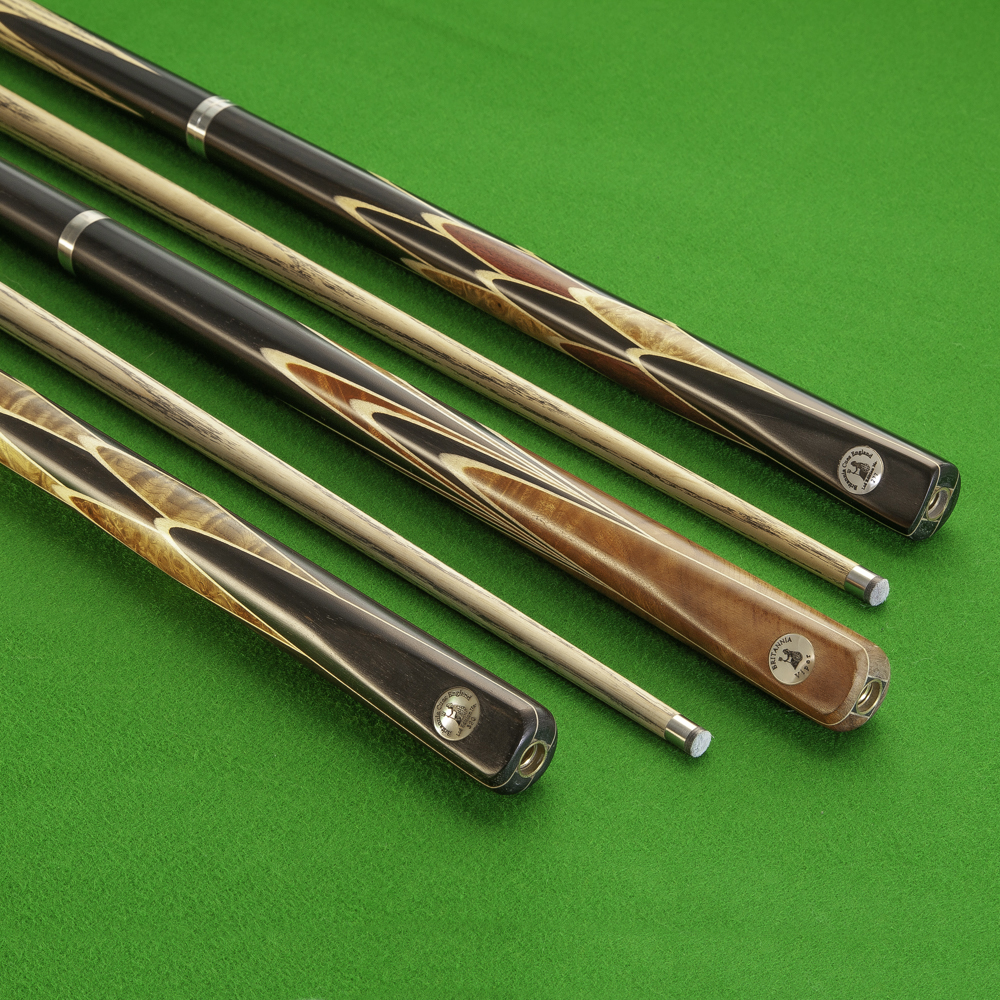
Every Britannia cue starts with premium air-seasoned North American ash. We only use timber that has passed our quality checks and that’s been naturally dried for years. Doing this gives you a cue that’s stable, responsive, and built to last. Our production inspect every piece of timber, rejecting any that don’t meet our standards.
Our skilled craftsmen splice each cue by hand, combining ash with sustainably sourced exotic timbers from around the world. No two cues are exactly alike, giving you a personal instrument that’s unique and reflects your style.
Every cue bears our distinctive black-enamelled Mother of Pearl Britannia disc. This hallmark of quality shows your cue has been made to our exacting standards and will perform reliably for years.
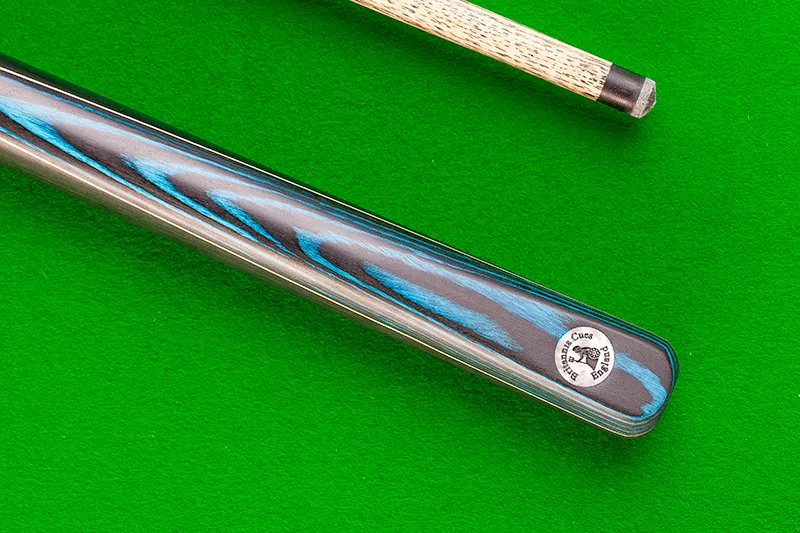
The Champion range: is perfect for beginners and intermediate players alike. Quality construction at an accessible price point. Available in one-piece and three-quarter jointed designs.
The Pro range: offers exceptional value for UK pool players with their smaller tip sizes and intricate splicing work coupled with premium timbers. Available in one-piece, two-piece and three-quarter jointed designs.
The Traditional range: is the pinnacle of our heritage designs. Maintaining the use of traditional materials while pushing boundaries of modern day cue making.
The Titanium range: represents our finest work. Hand-selected timbers, complex splicing patterns, and meticulous attention to detail for players who demand the best and want cutting edge technology with titanium ferrules.
Every cue we make is backed by our quality guarantee. We want you to enjoy your cue for many years, which is why we use only the finest materials and construction methods available.
The Champion Range | The Traditional Range | Pool Cues
Most adults find 57 or 58 inches comfortable. If you’re tall, over six feet, try 59 or 60 inches but you may still want a longer one depending on your height. Shorter players often prefer 48 to 54 inches. Cues normally want to be shoulder height when placed on the floor next to you as a guide.
Most players find 17.5 to 19 ounces works well. Lighter cues suit delicate shots and players who like more control. Heavier cues give more power for break shots. It’s always worth trying different weights if possible before buying to see what suits you the best as there is no right or wrong answer.
One-piece offers slightly better energy transfer and balance but is harder to store and carry. Three-quarter jointed is more practical for transport while maintaining a good feel, and two-piece is the ultimate convenience cue but not refined as the other two variants.
It depends on the chalk you use but for traditional chalks, you normally end up chalking before every shot or every few shots. A well-chalked tip prevents miscues and gives you better control.
The short answer to this is yes.
Pool tables in the UK typically use slightly smaller balls than snooker and dedicated pool cues tend to have slimmer tips. However, a snooker cue will work fine for casual UK pool play and the larger tip size will actually help any newer players to the game as it’s more forgiving. We often recommend a snooker cue as a first cue for someone looking to play UK pool. For serious pool players, a dedicated pool cue with a slightly smaller tip is worth considering.
Keep it straight and level when storing and do not leave it leaning against a wall. Avoid extreme temperatures and humidity in places such as cars, vans or near radiators. Wipe the cue down after use with a soft cloth. Replace tips when they wear down. More details can be found in our Cue Care Guide.
Buy from a retailer with a good returns policy. At Britannia, we want you to love your cue, so as long as the cue is in the exact same condition it was received, get in touch if you’re not completely satisfied so we can do our best to help.
Timber affects feel and appearance. Ash is traditional and offers excellent performance. Denser timbers like ebony, rosewood give a natural weight and feel. For beginners, the quality of construction though important, doesn’t matter as much as you feeling comfortable playing with the cue.
Snooker cues typically have larger tips at 9.5mm. English Pool cues often have slightly smaller tips between 8-8.5mm to accommodate the small balls. Using the right cue for your game makes a difference and helps you get better accuracy when playing your shots.
From an objective stance where we grade materials used and craftsmanship then yes, they are. However, not necessarily for beginners. Mid-range cues offer excellent value and performance. Expensive cues benefit players with developed techniques who can notice subtle differences. It’s the player that pots the balls, not the cue.
Choosing your first proper snooker or English pool cue is an exciting moment. You’re investing in your game and showing yourself that you’re serious about improving. Use what you’ve learned here to make an informed choice.

Remember, the most expensive cue isn’t always the right cue. Focus on getting the length and weight correct, choose a quality cue that fits your budget, and take care of your investment so your cue will serve you well for years.
If you’d like to browse our full range of hand-crafted snooker and pool cues, visit our shop page. Every cue is made using premium timbers and comes with our quality guarantee. Not sure which cue is right for you? Get in touch and we’ll be happy to help.
Ready to improve your game? Your perfect cue is waiting.
Browse Snooker Cues | Contact Us | Browse Pool Cues | More Guides
