
| KEY TAKEAWAYS Wipe your cue shaft with a soft, dry cloth after every session to remove chalk dust and hand oils.Never use water, sandpaper, or harsh chemicals on your cue shaft.Store your cue horizontally in a case, away from heat, damp, and direct sunlight.Replace your cue tip when it mushrooms badly, splits, chips or stops holding chalk after scuffing. |
A well-maintained snooker cue like the Britannia Fireflash Champion will last for years with a consistent care routine.
You’ve invested in a decent cue, and now you want to keep it playing well. Knowing how to clean a snooker cue properly, and how to look after the rest of it, is one of the most straightforward things you can do to protect that investment and maintain your performance at the table.
A cue that’s been neglected will let you know about it. The shaft becomes sticky or rough under your bridge hand, the tip loses its shape and stops holding chalk, and the joint starts to feel loose or gritty. None of this helps your game, and much of it is avoidable.
This guide covers everything you need to know about snooker cue care, from quick post-session wipe-downs to monthly shaft maintenance. Whether you play twice a week at your local club or occasionally at home, these habits will keep your cue in good shape for years.
Most players don’t clean their cue often enough. A session of snooker or pool leaves chalk dust, hand oils, and general grime on the shaft. Let it build up and the shaft becomes tacky, which disrupts your bridge action and your cueing.
The good news is that regular upkeep takes less than a minute if you stay on top of it. Here is a simple schedule to follow:
| When | What to do |
| After every session | Wipe the shaft and butt with a dry, soft cloth. |
| Every few sessions | Check the tip shape and chalk retention. Buff the shaft with a cue slicker if it feels tacky. |
| Monthly | Apply cue wax to the shaft. Check the joint is clean and secure. |
| As needed | Reshape or replace the tip. Clean the joint with fine wire wool. Reapply wax after heavy use. |
The shaft is the most important part of your cue to maintain. It takes the most contact from your hands, picks up the most chalk, and is what most noticeably affects your cueing action when it gets dirty.
Take a clean soft, dry cloth and wipe the full length of the shaft from the ferrule end down to the joint. Work your way around it, not just along the top surface. This removes surface chalk and grease before it has a chance to work into the wood.
When the shaft feels rough or you can see a visible build-up, it’s time for more than a wipe-down. A cue slicker is ideal here. This pad fits around the shaft and has a fine scouring material that cuts through ingrained dirt without damaging the finish. A few long strokes from joint to ferrule and the shaft comes up smooth again.
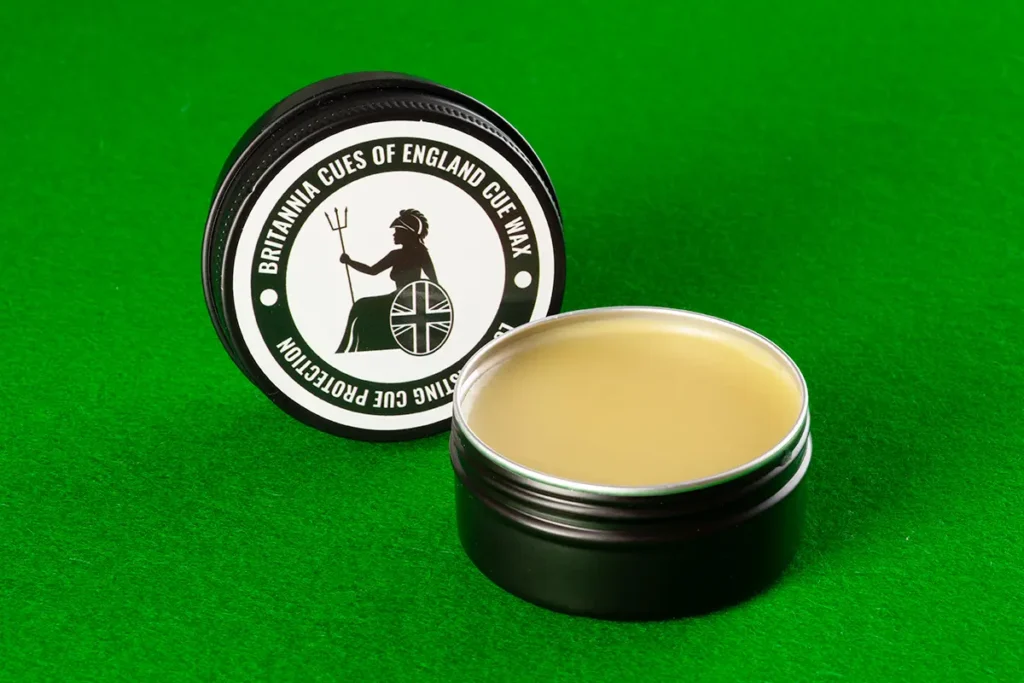
After using a slicker, apply a small amount of Britannia Cue Wax to the shaft with a soft clean cloth or kitchen paper. Leave it for a couple of minutes, then buff it off until the surface feels dry and smooth. This repels moisture and dirt, restores the shaft’s natural feel, and protects the wood between sessions.
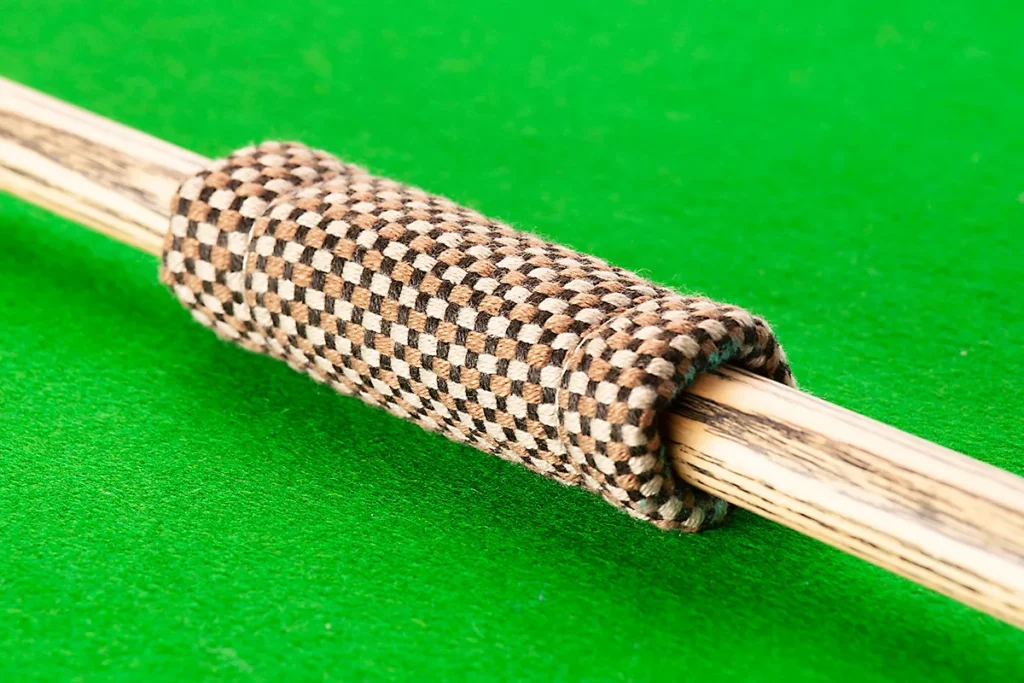
Never use water to clean your cue. Water causes wood to swell, which can raise the grain and make the shaft feel rough. If you need to loosen stubborn dirt, a very slightly damp cloth is the maximum, and you should dry the shaft immediately with a clean cloth straight afterwards.
If you have a two-piece or three-quarter jointed cue, check the joint regularly. Grit and chalk dust settle in the threads and around the metal insert. Disconnect the joint, wipe it with a dry cloth, and if there is visible build-up, use a small amount of fine wire wool very gently to clean the threads. The joint should screw together cleanly without forcing or friction.
The tip is your only point of contact with the cue ball, so its condition directly affects your control and consistency. A worn or poorly shaped tip costs you accuracy, causes miscues, and means you’re fighting the cue rather than playing with it.
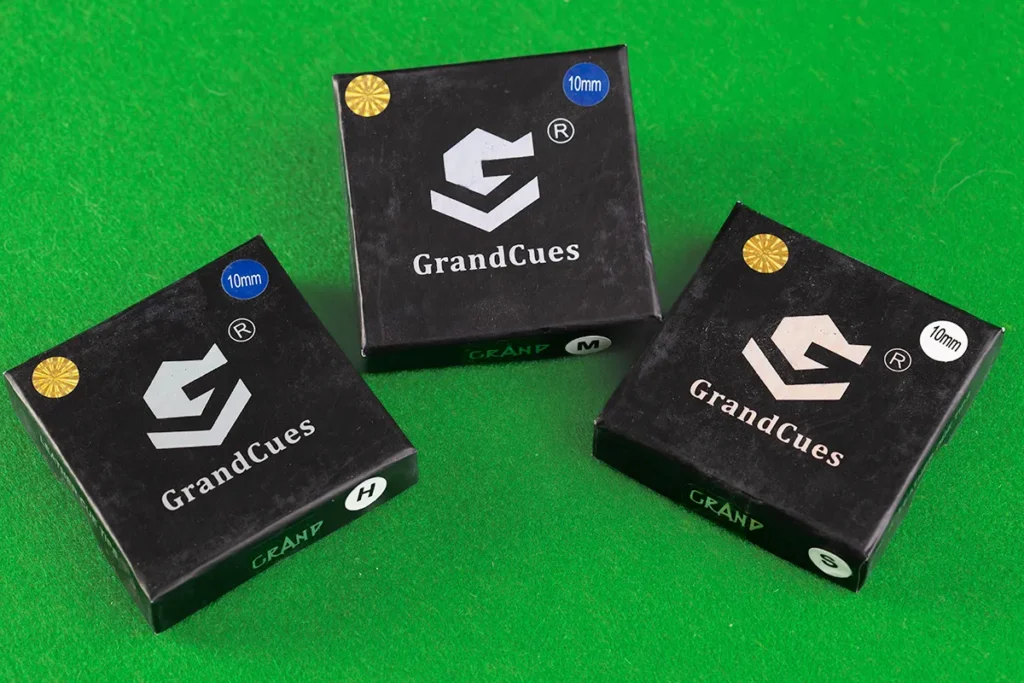
Depending on the chalk you’re using, you may need to chalk before every shot. Apply it lightly and evenly in a circular motion to build up a thin, consistent layer. Don’t press too hard or dig the chalk into the tip, as this can deform it over time. Quality chalk, such as Taom Chalk doesn’t need to be applied as often, and transfers reliably and leaves less residue on the shaft than standard options.
A snooker cue tip should have a rounded profile, roughly the curve of a 10 pence piece edge. Over time, the tip flattens under repeated impact. When it does, use a tip shaper or scuffer to restore the curve and roughen the surface. A shaped, textured tip holds chalk far better than a flat or glazed one.
Scuffing the tip also helps if it feels hard and glassy. Run a tip pick or fine scuffer over the surface in short strokes to open the leather up. The aim is a slightly textured surface, not to shred the tip.
Check the tip regularly. It should overhang the ferrule very slightly all the way round. If it is flush with the ferrule or receding, or if it has mushroomed out well past the ferrule’s edge, it needs reshaping or replacing. If the tip is cracking, peeling, or won’t hold chalk even after scuffing, replacement is the right call.
How you store your cue when you are not playing matters more than most players realise. Wood responds to its environment, and the wrong conditions can cause a straight cue to warp over a surprisingly short period.
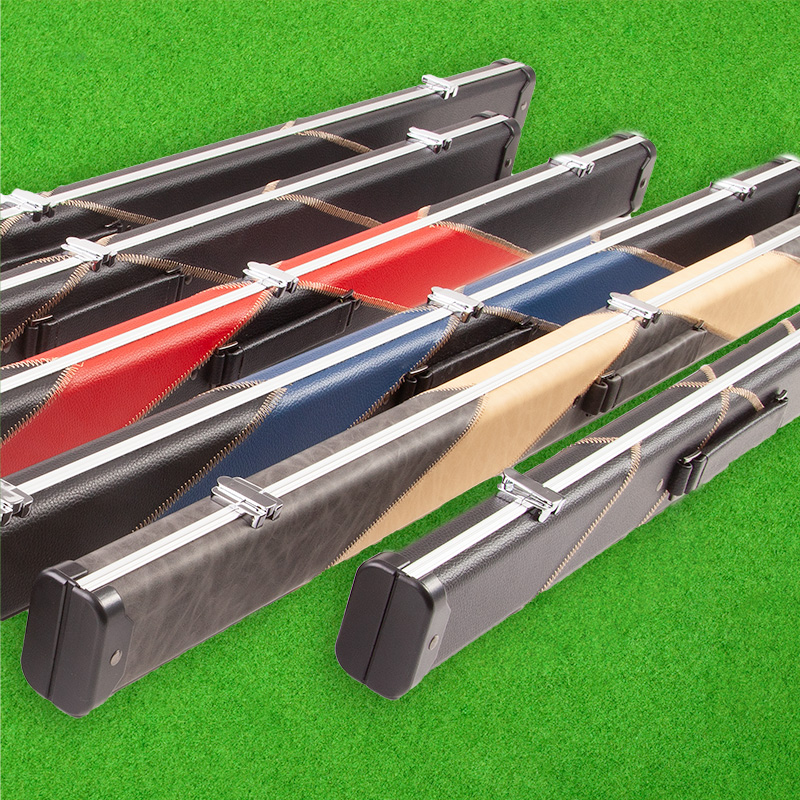
A good cue case protects your cue from knocks, dust, and temperature changes. It is the single most effective thing you can do for long-term cue care. If you transport your cue to and from a club, a case is not optional.
Leaning your cue against a wall, even for a few days, puts sustained pressure on one side of the shaft and can cause it to bow. If you are not putting it in a case, lay it upright in a cue rack or across a surface where it is fully supported along its length.
This is especially important in summer. Leaving your cue in a car or van on a warm day, next to a radiator, or in a damp garage creates conditions for the wood to expand, contract, or absorb moisture. None of that is good for straightness or stability. Store your cue somewhere that stays at a consistent room temperature.
A lot of cue damage is accidental. Here are the things worth being deliberate about.
Sandpaper removes the protective finish from the shaft and leaves raw wood exposed. Raw wood picks up grime faster, roughens more quickly, and is more vulnerable to moisture. If your shaft feels rough or sticky, use a cue slicker first, then apply cue wax. Standard sandpaper should never come near the shaft.
Oils from your skin, hand cream, and general grime are the main contributors to shaft build-up. Washing your hands before a session makes a real difference. Some players wipe the shaft with a dry cloth between frames as a matter of habit.
A tip that is too worn, too flat, or too hard will cause miscues. These are not just frustrating, they can also put stress on the ferrule if the cue jars on contact. Deal with the tip before it becomes a problem. Check it at the start of every session.
If a jointed cue is not screwing together smoothly, there is a reason. Forcing it risks damaging the thread or the metal insert. Clean the joint first, then check for any obvious damage before trying again.
This is one of the most common causes of warped cues. Even an hour in direct sun on a warm day can generate enough heat inside a car to deform the shaft. Leave the cue at home if you are not going straight to where you are playing.
A consistent cleaning routine, a monthly wax, and sensible storage are the foundation of good cue care. Neglect those basics and it costs you far more over time than any tip replacement ever would.” — Michael West, Britannia Cues
Replacing a tip is a routine part of owning a cue, not a sign something has gone wrong. Most club-level players will replace their tip once or twice a year, depending on how often they play.
The tip has mushroomed badly and overhangs the ferrule significantly on all sides. Mild mushrooming can be reshaped, but once it is past a certain point the structural integrity is compromised.
The tip has worn down so thin there is not enough material left to hold a proper chalk layer, even after reshaping.
The tip is cracking or splitting. A cracked tip produces an unreliable contact point and should be replaced straight away.
The tip is glazed and will not hold chalk reliably even after scuffing.
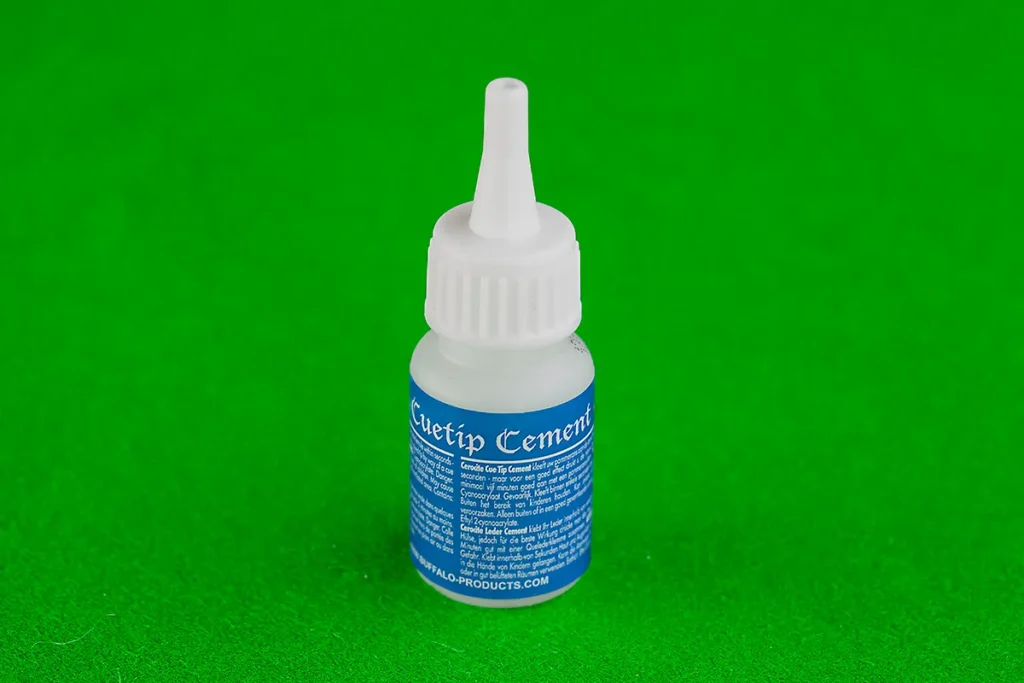
With the right materials, retipping is straightforward. You will need a replacement tip from the Britannia cue tips range, sandpaper to prepare the ferrule surface and base of the tip, and Cue Tip Cement to bond the new tip.
Remove the old tip cleanly, this is normally done with a sharp Stanley blade. Sand the top of the ferrule flat to give the new tip a clean surface to bond to. At this point also sand the base of the new tip to remove the ‘skin’. Apply a small amount of tip cement to both the ferrule and the new tip, let it get tacky for a few seconds, then press together firmly and hold for around 30 seconds. Leave it to cure for at least an hour before shaping and working. Shape the tip once it is fully set.
Personally, I would always use an oversize tip and trim it down to the ferrule to ensure the tip is flush to the ferrule.
For anyone not confident doing it themselves, most cue shops will retip for a small fee and it takes about ten minutes.
For more detail on all of the above, the Britannia Cue Care guide is a good starting point.
Good cue maintenance does not take much time, but it makes a genuine difference to how your cue plays and how long it lasts. The essentials are a clean shaft, a well-shaped tip, and sensible storage.
If you need the right products, the Britannia Cue Care range covers everything, including cue slickers, cue wax, tip cement, and replacement tips.
Looking for a new cue? Browse our snooker cues and pool cues, or read our guide to how to choose a snooker cue if you are ready to invest in something new.
Wipe the shaft with a soft, dry cloth after every session to remove chalk and hand oils. For a deeper clean, run a cue slicker along the full length of the shaft to cut through ingrained dirt, then apply a small amount of cue wax and buff it off. Avoid water, harsh chemicals, and sandpaper.
No. Water causes wood to swell and can raise the grain, making the shaft feel rough. If you need to remove a stubborn mark, a very lightly damp cloth is the maximum, and you should dry the shaft immediately afterwards with a clean cloth.
Some players use a small amount of rubbing alcohol on a soft cloth for stubborn marks. It evaporates faster than water, which reduces the risk of moisture damage. That said, repeated use can dry out the wood over time, so it is better to rely on a cue slicker and wax for standard maintenance and save alcohol for occasional use only.
Start with a cue slicker, which cuts through dirt and smooths the surface without stripping the finish. Follow up with cue wax to condition and protect the wood. If the shaft is still rough after that, it may have been sanded at some point and the finish removed, in which case a specialist is better placed to help.
After every session, wipe the shaft down with a dry cloth. A more thorough clean with a slicker and wax once a month is good practice, or more frequently if you play several times a week.
Keep it horizontal in a cue case or on a cue rack that supports it along the full length of the shaft. Avoid leaning it against walls. Keep it away from heat sources, direct sunlight, and damp environments such as garages or cars.
Replace it when it has mushroomed beyond easy reshaping, when it has worn down to a very thin disc, when it is cracking or splitting, or when it will not hold chalk reliably even after scuffing. For most regular players, that means once or twice a year.
Do not use sandpaper on the shaft. Do not clean it with water or harsh chemicals. Do not lean it against a wall. Do not store it in a hot car or a damp area. Do not play with a worn or damaged tip any longer than necessary. And do not force the joint if it is not screwing together cleanly.
